
The Concord Standard
Quality Standards & the Care Guide for the American Home
This is the working guide behind the directory: the material benchmarks we hold every standard to, the tactile inspection we perform at the bench, and the seasonal cadence that keeps household goods in long-term working order. If a piece in your own home meets the benchmark below, it belongs on your shelf — whatever the maker's label says.

Why We Keep a Standard
A Standard Is a Promise You Can Touch
Most home goods are described; few are documented. A Hearthline standard is documented three ways: a material benchmark, an inspection method, and a care cadence. The benchmark tells you what the piece is made of and how it should feel. The inspection tells you how to verify it with your own hands. The cadence tells you what to do each season so the piece keeps working.
We keep this discipline because a home is an accumulation of small, reliable things. The knife that holds an edge, the board that forgives a hard chop, the linen that dries in an hour — these are the life hacks that actually survive contact with a real household. Quality, in our book, is what remains after ten years of Mondays.
Material Benchmarks
The Benchmarks We Measure Against
- Hardwood
- Kiln-dried American black walnut, 8–10% moisture, end-grain construction for daily cutting HL-QC-101
- Forge steel
- High-carbon steel at 56–58 HRC, forged by hand, single bevel ground and strop-finished HL-QC-102
- Linen and cotton
- 180 gsm or better flat weave, stonewashed, no optical brighteners; must dry flat in under an hour HL-QC-103
- Glass
- Amber soda-lime glass, hand-tinted, sealed with brass lids rated for repeated thermal cycles HL-QC-104
- Joinery
- Hand-cut dovetails on a 1:8 baseline; no gaps visible to a fingernail, no metal in the carcass HL-QC-105
- Cast iron
- Grey cast iron, pre-seasoned with flax oil in three coats, seasoned surface smooth and slightly satin HL-QC-106
Tactile Inspection
How to Check a Standard with Your Hands
Our inspectors work without instruments first and with them second. The five-step tactile pass below takes under two minutes and is the same pass we ask owners to run each spring.
- Weight and balance. Pick the piece up as you would use it. A well-made tool settles into the hand with no head-heavy or tail-heavy pull.
- Surface walk. Run a bare palm across the working surface. You should feel finish, not glue lines, filler ridges, or sanding scratches that run with the grain.
- Joint test. On joined work, press the joint diagonally. A true dovetail or box joint gives no play; a hairline of light through the seam is a reason to ask questions.
- Edge and rim. Check the working edge with a thumbnail held perpendicular. A properly finished edge is uniform and free of burrs.
- Function dry-run. Use the piece empty, as it will be used: open the drawer, swing the skillet, fold the towel. The motion should feel finished, not something you are still adjusting to.
Seasonal Calendar
The Four-Season Care Calendar
The cadence from the directory, written out as a working calendar. Keep a copy on the inside of the pantry door and the season takes care of itself.
Spring
Renew
- Re-wax walnut surfaces and oil the end grain
- Run the five-step tactile pass on every standard
- Steam linens before the first garden season
Summer
Preserve
- Label and date every preserving jar as it seals
- Brush brass after outdoor work, then dry at once
- Keep the benchside kit oiled and within reach
Autumn
Store
- Fold and store the linen set with cedar sachets
- Condition cast iron and shelf it near the stove
- Touch up worn dovetail pins before the heating season
Winter
Tend
- Hold the Sunday workbench routine without fail
- Wipe and shelf the board after every hard day
- Rotate towels and air the pantry shelf monthly
Stewardship Notes
Wood, Linen, and Brass, Kept Honesty
Wood keeps
Walnut and other hardwoods are alive in the way that matters: they take up moisture and let it go. Keep boards and workbenches away from direct heat, wash them with warm water and a soft cloth, and feed the end grain with a thin coat of beeswax each spring. A dry, well-fed board will outlast the hardware in the rest of the kitchen.
Linen keeps
Flat-weave linen gets stronger with washing. Line-dry it when you can, store it dry and folded in its full width, and reserve the mulberry accent cloth for the table, not the garage. A properly kept towel set is a fifty-year piece of furniture for the bathroom shelf.
Finishing Notes
When to Renew, and When to Retire a Tool
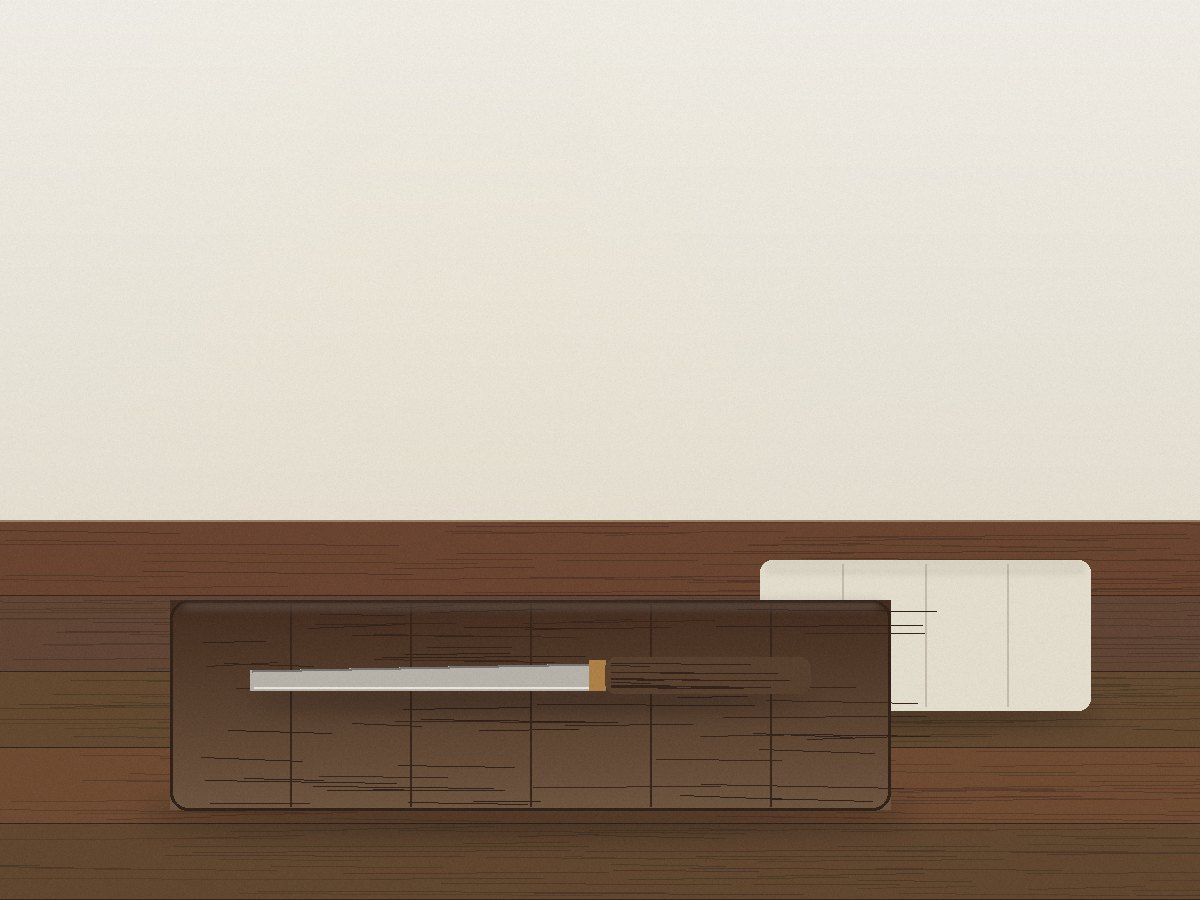
Every standard on the shelf is renewable: edges are re-ground, finishes are re-waxed, joints are re-seated, and iron is re-seasoned. The exceptions are few and honest. Retire a tool when a crack runs through its load-bearing joint, when a blade has lost so much steel that the geometry is gone, or when a handle has worked loose in a way that endangers the hand.
Retiring a tool is part of the craft, not a failure of it. The ledger in the Concord studio keeps a line for every piece that has been put down on purpose — and the space it leaves is where the next good thing gets learned from.